dangerous tree removal
Dangerous tree removal services help protect homes, businesses, vehicles, landscaping, and people from trees that have become unstable or unsafe. Hazardous trees can fail with little warning, especially during storms, high winds, heavy rain, or saturated soil conditions. Professional evaluation and removal can reduce the risk of falling trees, broken limbs, structural damage, and personal injury.
Leaning trees can pose a serious safety concern when the lean develops suddenly, increases over time, or points toward a home, driveway, roadway, utility area, or other structure. A significant lean may indicate root damage, soil instability, trunk weakness, or structural imbalance. When a tree can no longer support its weight safely, removal may be the best option.
Dead trees are another major hazard. Once a tree dies, its wood and root system gradually weaken. Dead branches can fall without warning, and the entire tree may eventually collapse. Because deterioration often occurs internally, a dead tree may appear stable even when its structure has been severely compromised.
Storm-damaged trees can also become dangerous after high winds, lightning, heavy rain, or severe weather. Split trunks, hanging limbs, broken branches, uprooted roots, and partially fallen trees can create immediate hazards. Prompt removal of unstable trees and damaged sections can help restore safety and prevent additional property damage.
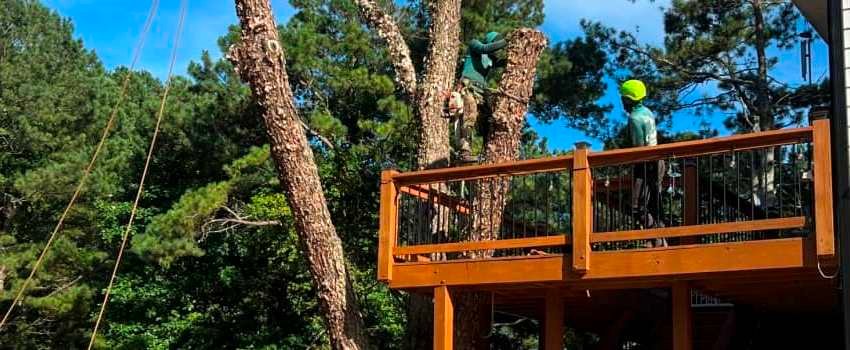
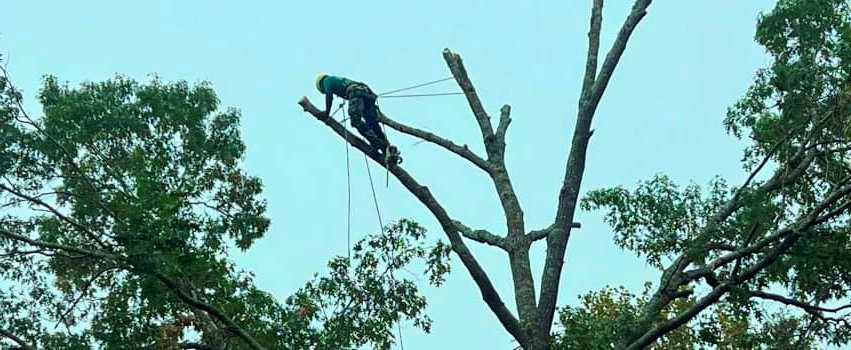
Professional dangerous tree removal requires careful planning, specialized equipment, and experienced crews. The safest approach may include sectional dismantling, controlled lowering of large limbs, rigging, crane-assisted removal, or other techniques based on the tree’s size and location.
Whether you are dealing with a leaning tree, dead tree, storm-damaged tree, or another hazardous condition, professional dangerous tree removal services provide a safer, more controlled solution for protecting your property and reducing risk.